
Blog
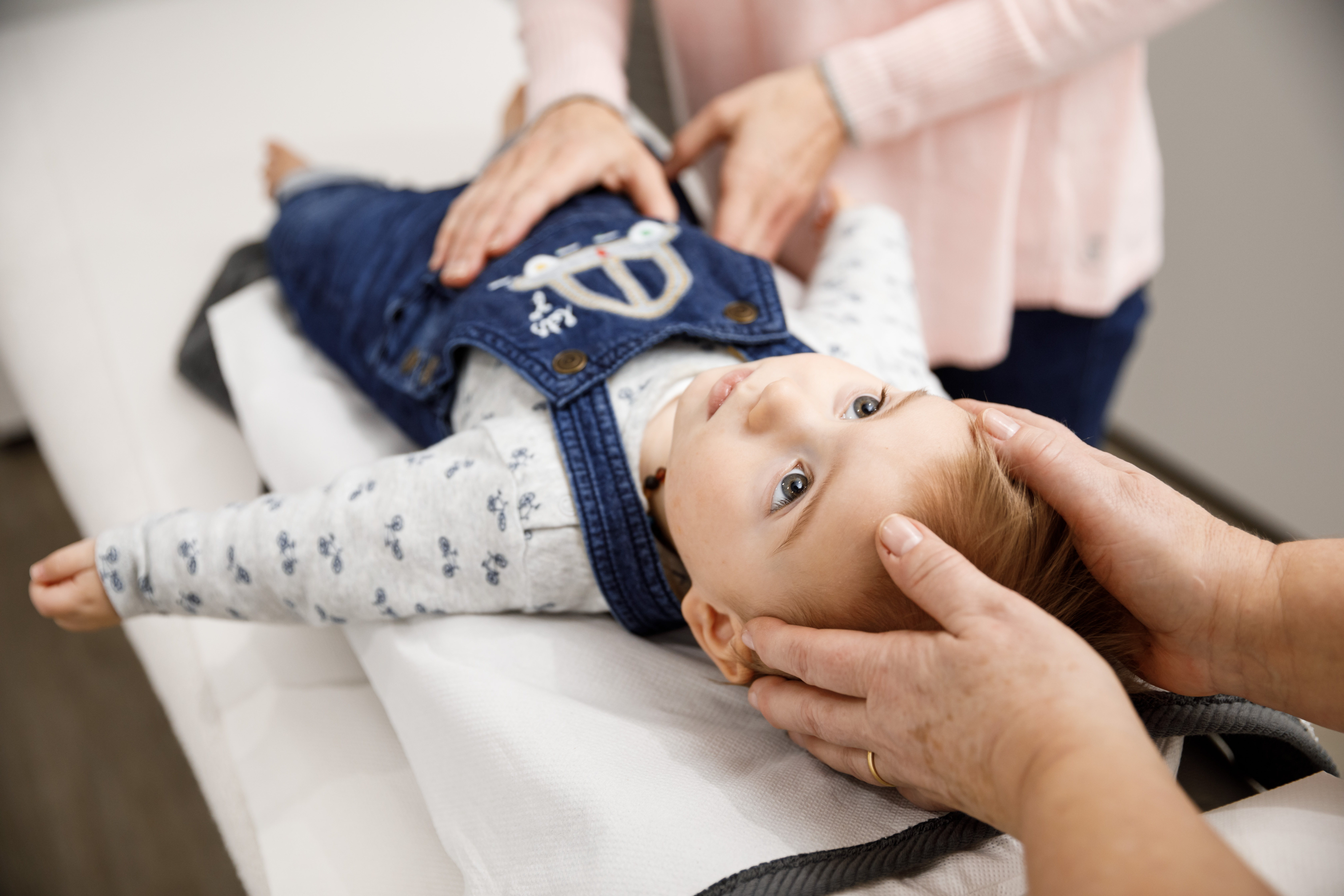
Every baby moves a little differently, but some patterns are worth paying attention to. A consistent head turning preference, difficulty latching on one side, a curled resting posture, or asymmetric movement can all be signs of physical tension in your newborn, often linked to positioning in the womb or a challenging birth.
Many parents in Jersey find that a short course of gentle, support during these early months helps their baby settle into more comfortable, symmetrical movement. Understanding what to look for is the first step and you don't have to navigate it alone.
1. A one-sided head turn preference
If your baby consistently turns their head to one side and resists or fusses when you try to turn it the other way, this can indicate tightness, often in the neck (like the SCM muscle you'd see with torticollis).
2. Difficulty latching on one side only
If breastfeeding is comfortable on one breast, but consistently awkward, shallow, or distressing on the other, and it is not a positioning issue that you have already tried adjusting, asymmetric tension can be a contributing factor.
3. A curved or "C-shaped" resting posture
Babies who consistently lie curled to one side, even when repositioned, rather than resting more symmetrically, may be holding tension through the spine or pelvis.
4. Excessive arching or stiffening during feeds or handling
Some normal squirming is expected, but persistent arching away from you, especially paired with distress, can be worth a second look.
5. Asymmetric movement of the arms or legs
Watch how your baby kicks or reaches, noticeably favouring one side, or one limb seeming less mobile or "stuck," is something to flag rather than assume will resolve on its own.
NB: These are signs to simply be aware of, not a diagnosis. Every baby moves differently, and many of these resolve naturally. If you notice a consistent pattern, it's always worth mentioning to your health visitor, GP, or a paediatric trained practitioner. Trust your instincts mumma you know your baby best!
Do you think I can help? Get in touch today
Book an appointment